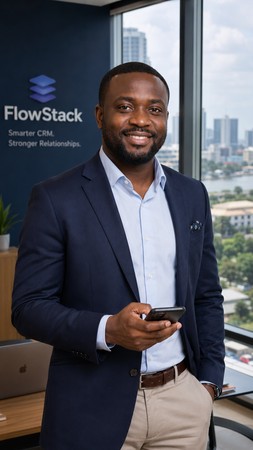


Founder, Bangalore
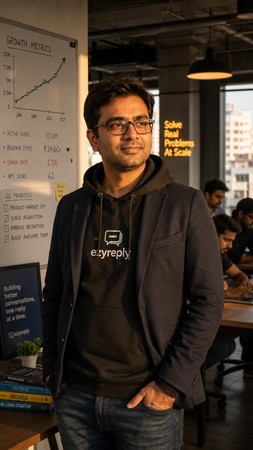


About The Client
Daniel is the solo founder and CEO of a B2B fintech startup in Bangalore. His company has 14 employees, $2.3M in seed funding, and a growing customer base. As the founder, Daniel is the primary external face of the company — handling investor relations, partnership outreach, customer success escalations, and media inquiries. All through email.
Daniel's email was a war zone. As the founder of a funded startup, every email felt high-stakes. An investor asking about metrics. A potential partner proposing a collaboration. A customer escalation that could make or break a relationship. A journalist requesting a comment for an article.
"Every email felt like it needed a perfect reply. An investor email that's too casual could damage confidence. A partner email that's too formal could feel cold. I was spending 3 hours every morning just on email — and that was before I could do any actual work."
The problem was compounded by context switching. Daniel needed to toggle between multiple personas: visionary founder for investors, technical expert for customers, accessible leader for his team, and thoughtful partner for business development. Each required a different tone, level of detail, and vocabulary. Keeping it all straight was mentally exhausting.
A fellow founder at a Y Combinator event mentioned EzyReply during a casual conversation. What sold Daniel was the voice learning and context engine combination. "I need AI that knows who I am and who I'm talking to — not just generic business English."
Daniel connected his Google Workspace account and immediately set up his context docs: his company's one-pager, current pricing, product roadmap highlights, and investor FAQ. The baseline voice scan analyzed his last 20 sent emails and built an initial profile that captured his natural writing style — slightly technical but accessible, confident but not arrogant.
Within a week, Daniel developed a new rhythm. He'd open EzyReply's inbox, scan the AI-generated summaries (2 sentences with urgency score), and prioritize his replies. For investor emails, he'd pick the "Yes, moving forward" draft, adjust the metrics to match the latest numbers, and send. For customer escalations, the "Polite decline / not now" draft helped him manage expectations without sounding dismissive.
The voice learning was the feature that made Daniel a believer. After about 25 edits, EzyReply had mapped his style precisely enough that he stopped feeling the need to majorly rewrite drafts. He'd make minor tweaks — swap a word, adjust a number — and send. His investors, partners, and customers all got replies that sounded unmistakably like Daniel.

Less Time on Email

To Clear Inbox

Email Response Rate
Before EzyReply, Daniel's morning routine was a source of anxiety. He'd wake up, grab his phone, and scroll through 30+ new emails before getting out of bed. He'd flag the ones that needed careful replies and dread the 3-hour writing session ahead. His co-founder had started teasing him about "founder email paralysis" — the tendency to overthink every reply because it represented the company.
"The worst was investor updates. Every investor email felt like a mini board presentation. I'd write it, delete it, rewrite it, ask my co-founder to review it, send it, and then worry about it. Each one took 20 minutes minimum."
The context engine became Daniel's secret weapon. He loaded his context docs with detailed information about his company: product pricing tiers, target customer profiles, recent milestones, and competitive differentiators. Now when a potential partner emailed asking "How does your pricing compare to [competitor]?" EzyReply pulled the relevant comparison from his docs and crafted a response that was accurate and on-brand.
"I tested it. I asked my co-founder to read 10 of my replies from EzyReply and 10 I'd written myself, and tell me which were which. She couldn't tell. That's when I knew this was different."
The commitment tracker became Daniel's accountability system. As a founder, he was constantly making promises: "I'll send the deck by Tuesday," "I'll introduce you to our CTO," "I'll look into that issue." Before EzyReply, these promises often slipped through the cracks because he was juggling too many things. Now EzyReply detected each commitment, tracked it, and reminded him before it was due.
"There's nothing worse than an investor following up on a promise you forgot you made. It erodes trust. EzyReply hasn't let me drop a single commitment since I started using it. That alone is worth the subscription."
Daniel also started using the analytics dashboard to understand his email patterns. He discovered he was spending 40% of his email time on replies that were under 3 sentences — quick confirmations, acknowledgments, scheduling. These were perfect for EzyReply's one-click sends. He also found that his most productive email hours were 7–8 AM, so he started batching his EzyReply processing during that window.
"I used to think that being a good founder meant being available on email 24/7. Now I know that being a good founder means responding well — not just responding fast. EzyReply helps me do both. It's the only tool I recommend to every founder I meet."
Three months in, Daniel upgraded from Pro to the Team plan for his entire leadership team. His head of product, head of engineering, and head of sales all use EzyReply now. "Our external communication is more consistent than ever. We sound like one company, not four departments."